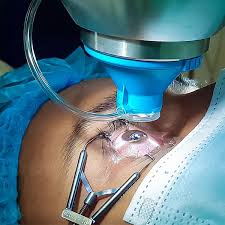
LASIK (Laser-Assisted In Situ Keratomileusis) is a popular and effective eye surgery that corrects refractive errors like myopia (nearsightedness), hyperopia (farsightedness), and astigmatism. The procedure reshapes the cornea using a laser to improve vision, often eliminating the need for glasses or contact lenses.
Quick and painless procedure
Rapid vision improvement, often within 24 hours
Reduced dependency on glasses or contact lenses
Long-lasting results with modern laser technology
Minimal recovery time
Consultation & Eye Examination – Detailed evaluation of eye health and corneal thickness.
Preparation – Numbing eye drops applied to ensure a painless experience.
Laser Treatment – The surgeon creates a flap in the cornea, reshapes it with a laser, and repositions the flap.
Post-Procedure Care – Eye drops and protective shields are provided to prevent infection and aid healing.
Experienced LASIK surgeons with thousands of successful procedures
Advanced laser technology for precise vision correction
Personalized treatment plans based on your eye profile
Comprehensive pre- and post-operative care
High patient satisfaction and excellent visual outcomes
You are tired of wearing glasses or contact lenses
Your vision has been stable for at least a year
You have a healthy cornea suitable for laser correction
You desire a quick, safe, and effective solution for refractive errors
Take the first step toward clearer vision today.
📞 Call us at: 91 80028 18888
🖥️ Appointment : Click here
Our team of eye care specialists is ready to help you with expert consultation and advanced cataract treatment.
Yes, LASIK is a safe and widely performed procedure with minimal risks when done by experienced surgeons.
Most patients notice improved vision within 24 hours and can resume normal activities shortly after.
Many patients achieve 20/20 vision, but some may still need glasses for reading or in rare cases.