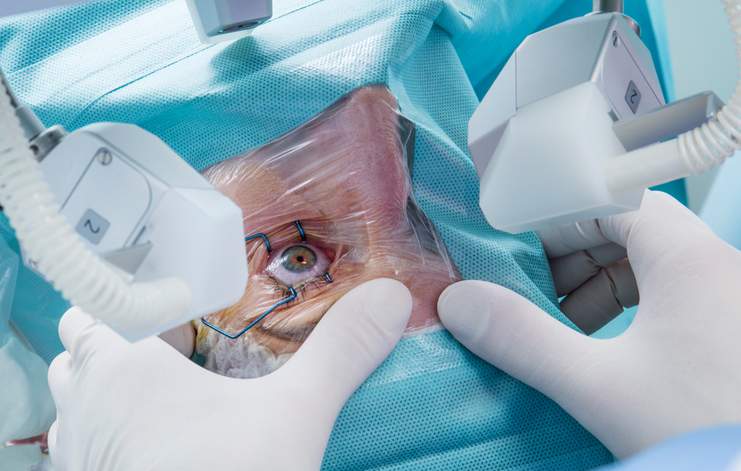
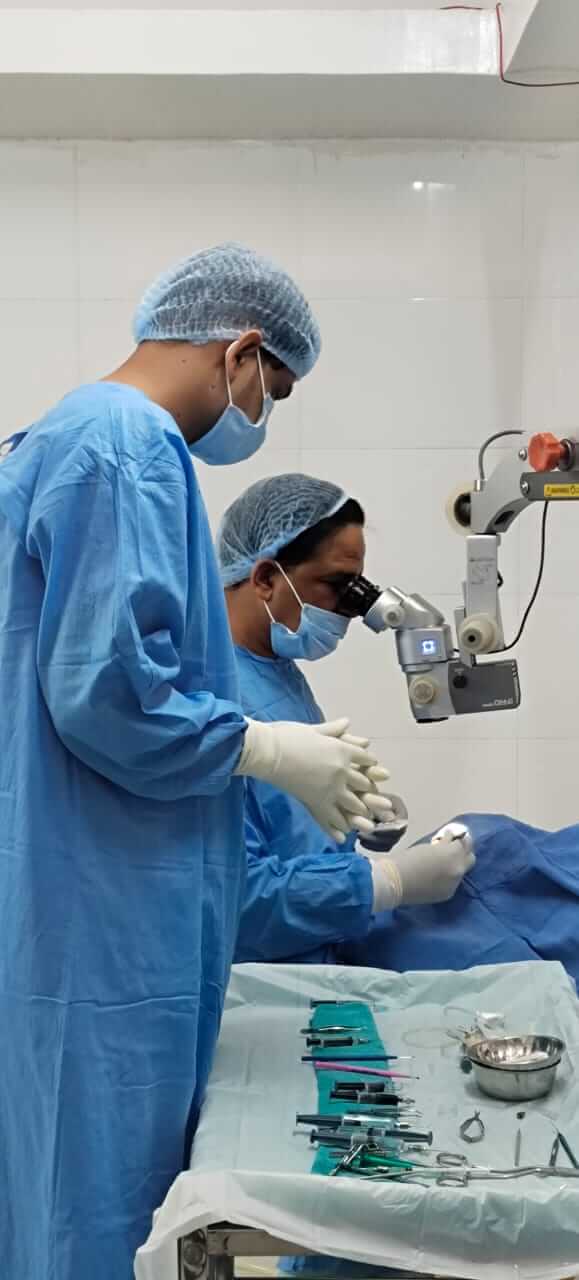
PRK is a type of laser eye surgery that reshapes the cornea to correct vision problems such as myopia (nearsightedness), hyperopia (farsightedness), and astigmatism. Unlike LASIK, PRK does not create a corneal flap, making it suitable for patients with thinner corneas or other corneal concerns.
Benefits of PRK Surgery
Corrects a wide range of vision problems
Preserves corneal tissue integrity
Safe for patients with thin corneas
Long-term stable results
Minimally invasive procedure with no corneal flap
The PRK Procedure
Preoperative Assessment – Comprehensive eye exam and corneal measurements.
Laser Reshaping – The surface layer of the cornea (epithelium) is removed, and the excimer laser reshapes the cornea to correct vision.
Post-Procedure Care – Bandage contact lens applied for healing, along with prescribed eye drops.
Recovery & Follow-Up – Vision improves gradually over several days to weeks; regular follow-ups monitor healing and visual outcome.
Why Choose Us for PRK Surgery?
Experienced surgeons with advanced laser technology
Personalized pre- and post-operative care
Safe and precise procedures for optimal vision correction
High patient satisfaction and excellent visual outcomes
Comprehensive follow-up and guidance
When Should You Consider PRK Surgery?
If you are not eligible for LASIK due to thin corneas
If you prefer a flapless laser eye surgery
If you want stable, long-term vision correction
If you have active lifestyles or professions where corneal flaps are a concern
Book Your Consultation
Take the first step toward clearer vision today. 📞 Call us at:91 80028 18888 🖥️ Appointment : Click here
Our team of eye care specialists is ready to help you with expert consultation and advanced cataract treatment.
FREQUENTLY ASK QUESTIONS
Do you have any questions?
Is PRK surgery safe?
Yes, PRK is a safe and effective procedure with long-term results when performed by qualified surgeons.
How long is the recovery?
Initial discomfort lasts a few days, with vision gradually improving over 1–2 weeks.
Can PRK be repeated if needed?
In some cases, enhancement procedures can be performed for optimal vision.
Will I need glasses after PRK?
Most patients achieve excellent vision, though some may still require glasses for reading or specific activities.